

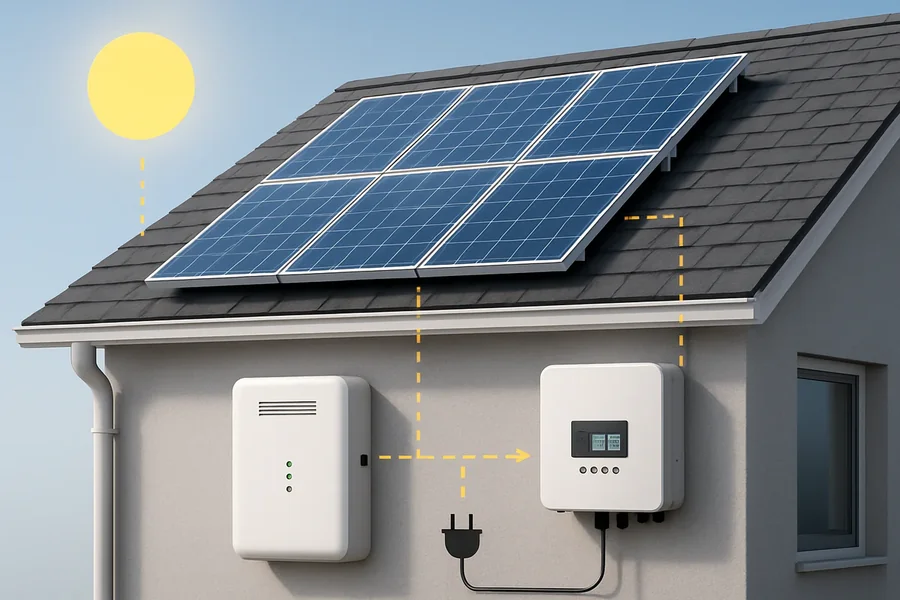
A solar battery bank is a key part of an off-grid solar power system and can also add major value to a grid-tied setup by improving efficiency, increasing energy independence, and providing backup power. Sizing matters because a battery bank that is too small may not store enough energy for your needs, while an oversized system can add unnecessary cost. Understanding how to calculate the right battery bank size helps create a system that supports your energy goals without overbuilding.
Start by Calculating Energy Consumption
The first step is figuring out how much electricity your home uses each day. Review your utility bills, use energy-monitoring devices, or add up the wattage and run times of the appliances you plan to power. Obviously, this last method takes a bit more time and effort, and a lot more math, so use one of the first two options if you can. Your battery bank should be sized based on actual energy needs and not just general estimates whenever you possibly can.
Decide How Many Days of Storage You Need
Next, decide how much energy storage you want available when your solar production is limited. Most off-grid systems aim for one to three days of energy storage, meaning that the battery bank is large enough to power the home for that period of time without getting any charge from the solar panels. For grid-tied systems using a battery bank as an emergency backup only, you might need less than a day’s worth of power to meet your needs.
Account for Depth of Discharge
Not all battery capacity is usable power. Every battery chemistry has a recommended depth of discharge, or DoD. Many modern lithium batteries provide 80% to 100% usable capacity, while lead-acid batteries are often limited to about 50% to help preserve battery life. For example, if you need 8 kWh of usable storage and your batteries have a 50% DoD rating, you would need 16 kWh of total storage. With a battery rated for 100% DoD, you would only need 8 kWh of total storage.
Consider Future Expansion
Many people initially size a battery bank for their current needs, but fail to plan for additional appliances, equipment, and other home upgrades. When you’re planning your system, you want to consider future electrical loads, home additions, and even seasonal usage changes to make sure that you’re getting the right size of battery bank for your needs.
Once you’ve taken all of these factors into consideration, you will be ready to build a Fortress Battery bank that fits your energy storage needs.