

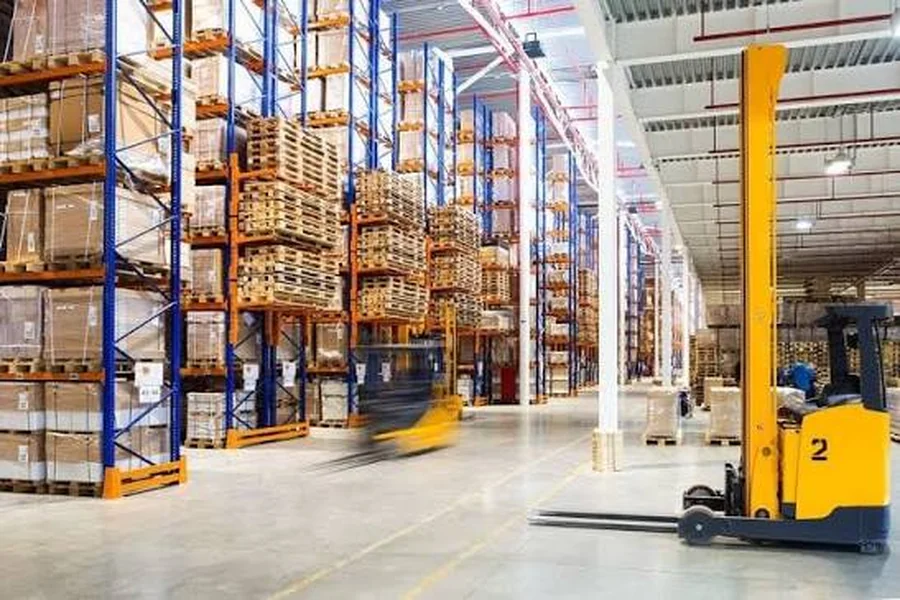
Automation is reshaping many industries, including the warehouses that handle the storage and shipping of many different types of goods. Modern warehouses now use a wide range of automated equipment to handle everything from storage and transportation to picking and packaging. While automation has many advantages, these types of equipment do still have their limitations. This guide covers popular automated warehouse equipment and the pros and cons of adopting each one.
Automated Conveyor Systems
Conveyor systems remain one of the most popular kinds of warehouse automation. These systems move products through your facility using belts, rollers, or chains, and are commonly used for transporting packages between receiving, storage, picking, packing, and shipping areas. Their popularity is primarily due to their simplicity and reliability. They can move large volumes of goods while reducing the need for manual handling, creating a more organized workflow, and reducing repetitive movement injuries.
However, these systems require a significant amount of floor space, and the upfront installation costs are high. They also don’t work for every warehouse layout, so it might not be a good solution for your warehouse, depending on the setup. Updating your conveyor system can also be incredibly expensive later if you need to rearrange your layout.
Automated Guided Vehicles
Automated guided vehicles (AGvs) are robotic vehicles that transport goods through warehouses without a human operator. They follow programmed routes using sensors, magnetic strips, or navigation software, depending on the type you get. AGVs are growing in popularity because they reduce labor requirements and can operate continuously with minimal supervision. Many warehouses today use them for moving pallets, as well as inventory and completed orders across various departments.
However, AGVs do require a major investment in software, infrastructure, and training for your employees. They can also struggle if your warehouse’s layout changes frequently, or if there’s heavy pedestrian traffic on the warehouse floor, which also increases the risks of an accident and injury.
Automated Storage and Retrieval Systems
Automated storage and retrieval systems (AS/RS) use computerized machines to automatically store and retrieve inventory from their designated locations. These systems are most popular in high-density warehouses that don’t have a lot of floor space for employees to move around. They help warehouses maximize their vertical storage (since employees don’t have to access the products themselves), and can also improve the accuracy of your inventory. Additionally, they can minimize product damage and eliminate the need for climbing shelves or operating lifts to reach products.
There’s no single type of automated material lifting equipment that’s right for every warehouse. Take the time to evaluate your products, shipping volume, layout, and growth plans, then choose a solution that fits your needs and goals. And of course, consult with an expert before implementing any of these automations in your workplace.