

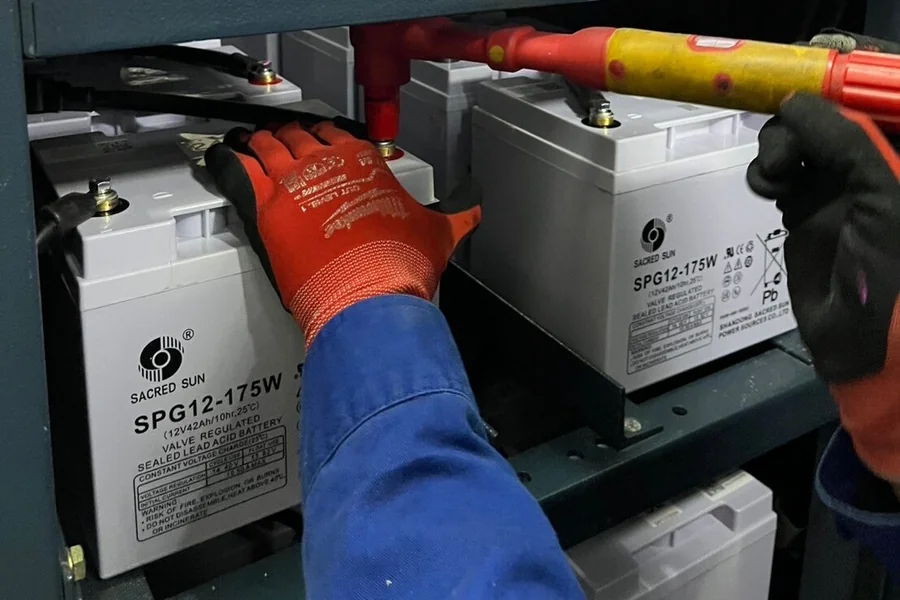
A UPS system is often installed to protect a business from sudden power failure, voltage fluctuation, and unexpected downtime. It gives critical equipment time to keep running, shut down safely, or wait for a generator to start. However, many companies forget that the reliability of a UPS system depends heavily on one component that quietly weakens over time: the battery.
UPS batteries do not usually fail overnight without warning. In many cases, they lose capacity gradually. The problem is that this decline may not be obvious during normal operation. The UPS may still turn on, display normal status, and appear ready. But when a real outage happens, weak batteries may not provide enough backup time to protect the business.
This is why battery replacement should be planned before failure begins, not after equipment suddenly shuts down.
Why Waiting for Failure Is a Risky Strategy
Some businesses replace UPS batteries only when they stop working. This approach may seem cost-effective at first, but it creates unnecessary operational risk. A failed battery can cause servers, network systems, security equipment, production controls, or communication devices to shut down without warning.
The cost of failure is often higher than the cost of planned replacement. Downtime may affect employees, customers, data, equipment, and business reputation. In environments such as data rooms, hospitals, factories, offices, and communication centers, even a short interruption can create serious disruption.
A UPS is supposed to reduce uncertainty. If its batteries are not reliable, the system may create a false sense of security.
Battery Age Is Only One Part of the Decision
Many people assume that UPS batteries should be replaced only after a fixed number of years. Age is important, but it is not the only factor. Battery life can be affected by heat, discharge frequency, charging conditions, electrical load, ventilation, installation quality, and maintenance history.
A battery used in a clean, temperature-controlled room may last longer than one placed in a hot or poorly ventilated environment. A system that experiences frequent power interruptions may also wear batteries faster than a system operating under stable electrical conditions.
This means replacement timing should be based on real battery condition, not just a calendar date. Regular testing and inspection help businesses understand when replacement should be scheduled.
Warning Signs Should Not Be Ignored
There are several signs that UPS batteries may be weakening. Backup time may become shorter than expected. The UPS may show alarms or battery warnings. Batteries may appear swollen, overheated, leaking, corroded, or physically damaged. In some cases, the system may fail a load test or show abnormal voltage readings.
Even small warning signs should be taken seriously. A battery that performs poorly during testing may not support the business during a real outage. Once the system is already showing symptoms, replacement should not be delayed for too long.
For companies that need professional support to inspect and เปลี่ยนแบตเตอรี่ ups, the safest approach is to work with a service provider that can check battery condition, recommend suitable replacement, install correctly, and provide a clear service report.
Replacement Should Fit the Load Requirement
UPS battery replacement is not only about removing old batteries and installing new ones. The replacement should match the UPS model, load requirement, required backup time, installation environment, and safety conditions.
If the business has added more equipment since the UPS was first installed, the original battery setup may no longer be enough. A system that once supported a small load may now be expected to protect servers, routers, switches, cameras, access control systems, and other devices. In that situation, battery replacement is a good opportunity to review the full backup plan.
A professional service team can help confirm whether the current system still matches business needs or whether adjustments are required.
Planned Replacement Reduces Downtime
Replacing batteries during a scheduled service window is safer than reacting during an emergency. The business can choose a suitable time, prepare affected teams, reduce disruption, and ensure that critical systems remain protected during the process.
Planned replacement also helps the accounting and procurement teams manage budgets more effectively. Instead of facing urgent replacement costs after failure, the company can plan maintenance expenses in advance.
For businesses with multiple UPS units, a replacement schedule can be especially useful. It allows the company to prioritize high-risk systems first and manage battery replacement in phases.
Testing After Replacement Is Essential
After new batteries are installed, testing should be performed to confirm that the system works properly. This may include checking voltage, connection quality, UPS status, charging behavior, and backup performance. The goal is to make sure the UPS can support the required load when needed.
A proper service report is also valuable. It gives the business documentation of the work performed and the condition of the system. This can support internal records, audit needs, maintenance planning, and future service decisions.
Maxi Power Plus lists services that include installing, transporting, renting, checking, and replacing UPS batteries, as well as testing, setting up, checking, and analyzing the quality of UPS systems and batteries. The company also provides battery condition reports for customers, which can help businesses make more informed maintenance decisions.
Battery Replacement Is Part of Business Continuity
UPS battery replacement should not be viewed as a small maintenance task. It is part of business continuity planning. If the battery fails, the entire UPS protection plan may fail with it.
Every organization should ask practical questions: Which systems must stay online? How long should backup power last? When were the batteries last tested? What would downtime cost? Is the UPS environment suitable for long battery life?
These questions help management understand that battery replacement is not simply a technical issue. It is a risk control decision.
Conclusion
A UPS system can protect a business only when its batteries are strong enough to perform during a real power problem. Because batteries weaken over time, waiting until failure occurs can expose the company to unnecessary downtime, data loss, equipment risk, and service disruption.
The smarter approach is to inspect regularly, test performance, watch for warning signs, and plan replacement before the system becomes unreliable. With proper service, correct installation, and clear reporting, UPS battery replacement becomes a practical way to protect both equipment and business continuity.
For any company that depends on stable power, replacing UPS batteries at the right time is not just maintenance. It is preparation for the moment when backup power truly matters.