

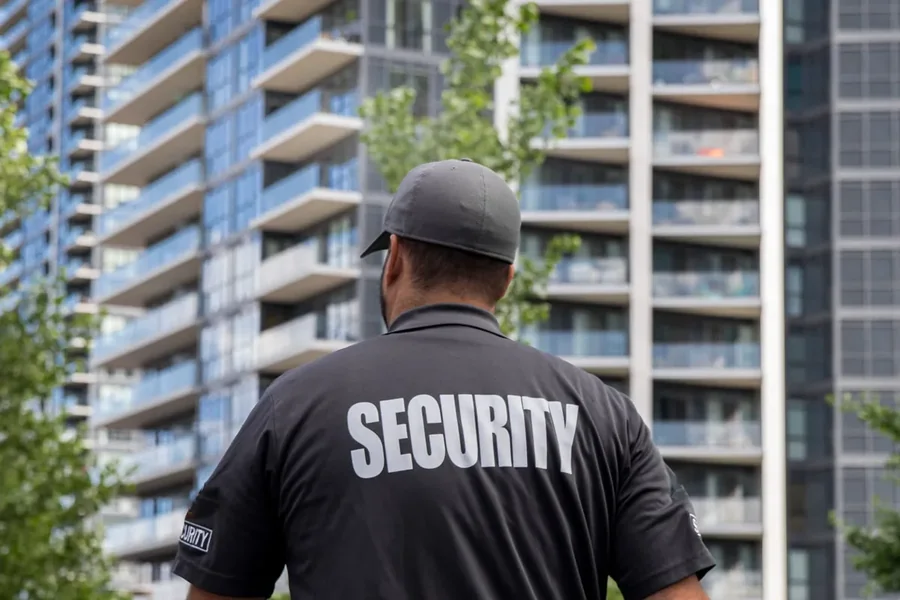
Apartment complexes in Long Beach face unique security challenges that require professional solutions. With property crime rates higher than 84% of US cities, Long Beach Security Guard Services have become essential for protecting residents and reducing liability for property managers. This guide covers everything you need to know about securing your multifamily property.
Why Apartment Complexes Need Professional Security
Long Beach apartment buildings house hundreds of families in close proximity. The constant flow of residents, visitors, delivery drivers, and service workers creates opportunities for criminals to blend in unnoticed.
Property managers face several common threats:
- Break-ins and burglaries targeting units and storage areas
- Package theft from lobbies and doorsteps
- Mail theft from unsecured mailbox areas
- Vehicle break-ins in parking structures
- Loitering and trespassing by unauthorized individuals
- Vandalism to common areas and resident property
Without proper security measures, these problems escalate quickly. One break-in can trigger a wave of move-outs as residents seek safer housing elsewhere.
The Real Cost of Inadequate Security
Many property managers underestimate what poor security costs them. The expenses go far beyond replacing stolen property.
Tenant Turnover
When residents feel unsafe, they leave. Replacing a tenant costs between $1,000 and $5,000 when you factor in vacancy loss, marketing, cleaning, repairs, and administrative time. A single security incident can trigger multiple move-outs.
Liability Exposure
California law holds property owners responsible for maintaining reasonably safe premises. If a resident is harmed due to inadequate security, you could face a negligence lawsuit. These cases often result in six-figure settlements or judgments.
Insurance Premiums
Properties with frequent claims see their insurance costs rise dramatically. Some insurers refuse to renew policies for complexes with ongoing security problems. Professional security can actually lower your premiums over time.
Property Value
Apartment buildings with security issues sell for less than comparable properties in the same area. Investors and lenders view security problems as red flags that affect long-term profitability.
Common Security Vulnerabilities in Apartment Buildings
Before implementing solutions, you need to understand where your property is most vulnerable. Most apartment complexes share similar weak points.
Entry Points
The main entrance is rarely the problem. Criminals typically enter through:
- Side gates left propped open by residents
- Parking garage doors that close slowly
- Pool and amenity area gates with broken locks
- Service entrances used by maintenance and delivery workers
- Ground-floor windows and sliding doors
Every entry point needs attention. A single unsecured door makes all your other security measures worthless.
Parking Structures
Underground and covered parking areas are prime targets. Poor lighting, limited visibility, and multiple hiding spots make these areas dangerous. Vehicle break-ins, catalytic converter theft, and personal assaults commonly occur in parking structures.
Mail and Package Areas
Centralized mailbox areas attract thieves who follow mail carriers and strike immediately after delivery. Package rooms without proper access controls become easy targets, especially during holiday shopping seasons.
Laundry Rooms
Late-night laundry rooms often lack adequate lighting and monitoring. Residents feel vulnerable in these isolated spaces, and criminals know it.
Stairwells and Hallways
Interior common areas need attention, too. Dark stairwells and long hallways without surveillance create opportunities for crimes to occur undetected.
How Security Guards Protect Apartment Communities
Professional security guards provide protection that cameras and access systems cannot match. They offer human judgment, immediate response, and visible deterrence.
Access Control
Guards verify that everyone entering the property belongs there. They check visitor credentials, confirm resident authorization, and turn away unauthorized individuals before they can cause problems.
This protection from outsider access is the foundation of apartment security. When criminals know someone is watching and checking, they choose easier targets elsewhere.
Patrol Services
Roving patrols cover large properties more effectively than stationary guards. Patrol officers check parking structures, walk hallways, inspect amenity areas, and verify that doors and gates are secure.
The unpredictable nature of patrols keeps criminals guessing. They never know when a guard might appear around the corner.
Incident Response
When problems occur, guards respond immediately. They can de-escalate conflicts between residents, document incidents for police reports, provide first aid in emergencies, and coordinate with law enforcement when necessary.
This rapid response prevents small problems from becoming major incidents.
Resident Services
Security guards also provide concierge-type services that improve resident satisfaction. They accept packages, assist with lockouts, give directions to visitors, and generally make residents feel cared for.
These positive interactions build trust between residents and security staff, making the entire community safer.
Types of Security Services for Apartment Complexes
Different properties need different security approaches. Here are the main options available to Long Beach apartment communities.
Standing Guards
A guard stationed at a fixed post provides constant presence at high-traffic areas. Lobbies, main entrances, and parking structure entries are common placements.
Standing guards work best for:
- Properties with a single main entrance
- High-rise buildings with lobby access
- Luxury communities where concierge service is expected
- Properties with ongoing security concerns requiring constant presence
Mobile Patrols
Patrol officers drive or walk through the property at regular intervals. They cover more ground than standing guards and can respond to incidents anywhere on the property.
Mobile patrols work best for:
- Large complexes with multiple buildings
- Properties with extensive parking areas
- Communities where a visible presence throughout the property is needed
- Budget-conscious properties that need coverage without 24/7 staffing
Gate Attendants
Guards stationed at vehicle entry points verify resident credentials and log visitor information. They prevent unauthorized vehicles from entering and maintain records of who comes and goes.
Gate attendants work best for:
- Gated communities with controlled vehicle access
- Properties where parking is a premium amenity
- Communities experiencing vehicle-related crimes
Overnight Security
Many properties need security most during late-night hours when management is off-site, and residents are asleep. Overnight guards patrol the property, respond to disturbances, and deter criminals who target sleeping communities.
What to Look for in an Apartment Security Provider
Not all security companies deliver the same results. Here’s how to evaluate potential providers for your Long Beach property.
Proper Licensing
California requires security guards to be licensed through the Bureau of Security and Investigative Services (BSIS). Verify that the company and all individual guards hold current, valid licenses.
Insurance Coverage
Your security provider should carry comprehensive liability insurance. Request certificates of insurance and verify coverage amounts meet your property’s requirements.
Training Programs
Ask about guard training. Quality providers invest in ongoing education covering:
- Access control procedures
- Conflict de-escalation
- Emergency response protocols
- Customer service skills
- Report writing
- Legal limitations on guard authority
Local Experience
A company familiar with Long Beach understands local crime patterns, knows which neighborhoods face specific challenges, and has relationships with local law enforcement. This knowledge improves their effectiveness at your property.
Communication Systems
Guards need reliable communication tools to call for backup, contact management, and coordinate with police. Ask what technology the company provides and how they handle emergency communications.
Reporting Practices
You should receive regular reports detailing guard activities, incidents observed, and any concerns. These reports help you identify patterns and adjust security strategies as needed.
Implementing a Security Plan for Your Property
Effective apartment security requires more than just hiring guards. You need a comprehensive plan that addresses all vulnerabilities.
Step 1: Conduct a Security Assessment
Walk your property with a security professional to identify weak points. Document every entry point, lighting deficiency, camera blind spot, and area where incidents have occurred.
Step 2: Prioritize Improvements
You probably can’t fix everything at once. Rank vulnerabilities by risk level and address the most serious issues first. A propped-open gate is more urgent than a dim stairwell.
Step 3: Combine Physical and Human Security
Technology and guards work together. Cameras record evidence, but guards respond in real-time. Access control systems limit entry, but guards verify credentials. Use both for maximum protection.
Step 4: Establish Clear Protocols
Guards need written instructions covering:
- How to handle different types of incidents
- When to contact the police versus handle situations themselves
- Who to notify in management for various situations
- How to document and report activities
Step 5: Communicate with Residents
Let residents know about security improvements. Share contact information for guards. Encourage residents to report suspicious activity. A community that works together is safer than one that relies solely on guards.
Step 6: Review and Adjust
Security needs change over time. Review incident reports monthly. Identify patterns and adjust guard schedules or patrol routes accordingly. What worked last year may need updating this year.
Cost Considerations for Apartment Security
Security is an investment, not just an expense. Understanding the costs helps you budget appropriately.
Hourly Rates
In Long Beach, unarmed security guards typically cost $25-45 per hour, depending on experience and duties. Armed guards cost more, usually $45-65 per hour. Prices vary based on contract length, hours needed, and specific requirements.
Coverage Options
You don’t necessarily need 24/7 security. Many properties find that strategic coverage during high-risk hours provides adequate protection at a lower cost. Common approaches include:
- Evenings and weekends only when management is off-site
- Overnight hours from 10 PM to 6 AM
- Peak times during mail delivery, package arrivals, and shift changes
- Full coverage for properties with serious ongoing concerns
Contract Terms
Longer contracts often come with lower rates. However, avoid locking into multi-year agreements until you’ve tested the provider’s performance. A month-to-month trial period protects your interests.
The ROI of Professional Security
Property managers often ask whether security pays for itself. The answer depends on your specific situation, but most properties see positive returns.
Reduced Turnover
If security prevents even two or three move-outs per year, the cost savings exceed most security budgets. Happy residents renew leases and refer friends.
Lower Insurance Costs
Documented security measures can qualify you for premium reductions. Ask your insurance broker how professional security affects your rates.
Avoided Lawsuits
A single premises liability claim costs far more than years of security services. Prevention is always cheaper than litigation.
Higher Rents
Safe properties command premium rents. Residents willingly pay more for peace of mind. Security can directly increase your revenue.
Taking the Next Step
Protecting your Long Beach apartment community starts with understanding your vulnerabilities and choosing the right security partner. The investment pays dividends through retained residents, reduced liability, and a reputation as a safe place to live.
Start with a professional security assessment. Identify your highest-risk areas. Then implement a combination of technology and trained guards to address those vulnerabilities.
Your residents trust you to provide a safe home. Professional security helps you deliver on that promise while protecting your property’s value and your peace of mind.