Why Choosing to Repipe Our Whole Home Was the Best Choice
I spent three years putting it off.
Three years of watching rust-colored water pour from our faucets every morning. Three years of explaining to guests why they shouldn’t drink from the tap. Three years of steadily declining water pressure that made showers feel more like a gentle mist than an actual rinse.
My wife kept pushing for a solution. I kept hoping the problem would somehow resolve itself or that maybe we could just patch things here and there.
Looking back now, I realize how foolish that was.
The Breaking Point
The decision to finally repipe our entire home didn’t come from wisdom or planning. It came from panic.
I was at work when my wife called. Her voice had that particular tone that told me something expensive had just happened. A pipe had burst in the wall behind our master bathroom. Water was everywhere—soaking through the drywall, pooling on the hardwood floors, spreading into our bedroom closet.
The plumber who came out for the emergency repair gave it to me straight. The burst pipe wasn’t a random failure. It was a symptom of a system-wide problem.
Our home was built in the 1970s, and like many houses from that era in Houston, it was plumbed with galvanized steel pipes. After nearly fifty years, those pipes were corroded from the inside out. The burst pipe was just the beginning.
He could patch this one leak, sure. But he’d be back. In a month, six months, maybe a year—he’d be back to fix another failure. And another. And another.
The Math That Changed Everything
I’m a numbers person, so I asked him to break down the costs.
Fixing this one burst pipe: $1,200 after drywall repair and painting.
If we averaged just two more failures per year over the next five years—a conservative estimate given the pipe condition—we’d spend at least $12,000 in emergency repairs alone. That didn’t account for water damage, increased insurance premiums, or the sheer stress of wondering when the next leak would strike.
A complete repipe of our 2,000-square-foot home? About $8,500.
The math wasn’t even close.
Understanding What Repiping Actually Means
Before this experience, I honestly didn’t know what a whole-home repipe involved. I imagined walls torn apart for months, contractors tracking mud through every room, and our lives completely upended.
The reality was nothing like that.
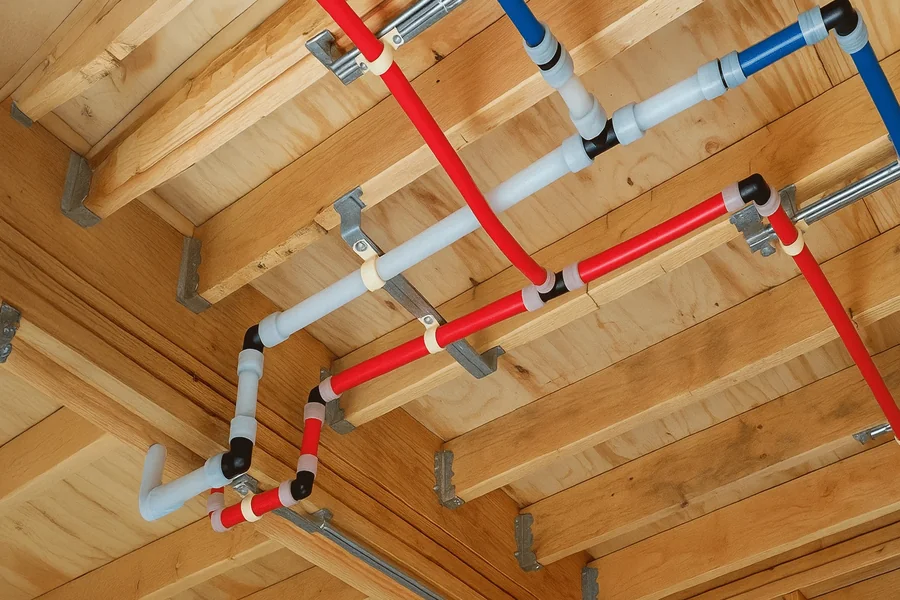
Modern repiping uses PEX tubing—a flexible, durable material that can last 50 years or more. Unlike the rigid galvanized pipes in our walls, PEX can be snaked through existing spaces with minimal wall cutting.
The process starts with the water supply lines. Every pipe that brings fresh water into your home gets replaced. Hot water lines, cold water lines, connections to every fixture—everything.
In Houston’s climate, where humidity and temperature swings can accelerate pipe corrosion, having a system designed to withstand these conditions made perfect sense.
The Week That Changed Our Home
I won’t sugarcoat it—the actual repipe week was disruptive.
The crew arrived on Monday morning with equipment, materials, and a detailed plan. They started by mapping out where pipes would run and marking spots where they’d need wall access.
They cut strategic access holes—mostly in closets and less visible areas. The noise was constant. Drills, saws, the sound of pipes being pulled through walls. For three days, our home felt like an active construction zone.
But here’s what surprised me: their attention to detail.
Every evening, they cleaned up completely. Drop cloths protected our floors. They covered furniture and sealed off work areas to contain dust. When they needed to cut into walls, they did it precisely and carefully.
By Thursday afternoon, all the new pipes were in. Friday was spent testing the system, patching walls, and doing finish work.
By Friday evening, they were gone.
The Difference Was Immediate
I turned on the bathroom faucet that first evening after completion.
The water ran clear. Not the rust-tinged brown we’d grown accustomed to. Not the pale orange that appeared after the water sat in the pipes overnight. Just clear, clean water.
The pressure was incredible. Our showerhead actually functioned like it was designed to. The kitchen faucet filled pots in half the time. Even our washing machine seemed to run better.
My wife filled a glass from the tap and took a drink—something she hadn’t done in our home for years. That simple act made the entire project worth it.
The Hidden Benefits Nobody Talks About
The water quality and pressure improvements were obvious. But there were benefits I hadn’t anticipated.
Our water heater became more efficient. Without corroded pipes restricting flow and causing the heater to work harder, our energy bills dropped noticeably.
The constant low-level anxiety disappeared. I didn’t wake up in the middle of the night wondering if I’d hear water running where it shouldn’t. I didn’t worry every time we left for vacation that we’d return to a flooded home.
Our home’s value increased. When we eventually sell, having a completely repiped home with transferable warranties is a massive selling point. It’s one less thing potential buyers have to worry about.
Why We Chose a Whole-Home Solution
Some people asked why we didn’t just replace the worst sections.
The answer is simple: once galvanized pipes start failing, they’re all on borrowed time. Replacing one section means the corrosion just continues in the remaining pipes. You’re not solving the problem—you’re postponing it.
The whole-home repipe solution addressed everything at once. No more wondering which pipe would fail next. No more emergency plumber visits. Just a complete, modern plumbing system installed by experienced Houston professionals who knew exactly what they were doing.
The Investment Perspective
$8,500 felt like a huge expense when we wrote that check.
But when I consider what we received in return, the value becomes clear. We essentially bought peace of mind, better water quality, improved home efficiency, and increased property value.
Compare that to the alternative: years of incremental failures, emergency repairs at premium prices, water damage remediation, and the constant stress of an unreliable plumbing system.
Some home improvements are about aesthetics or luxury. This was about the fundamental infrastructure that makes a house livable.
What I’d Tell Other Houston Homeowners
If you’re dealing with old galvanized pipes, frequent leaks, discolored water, or declining pressure, don’t wait like I did.
Get your pipes inspected. Understand what you’re dealing with. Get a realistic estimate for a complete repipe versus ongoing repairs.
In Houston, where our water quality and mineral content can be tough on older plumbing systems, proactive replacement makes even more sense than in other areas.
Yes, it’s a significant investment. Yes, it’s disruptive for a week. But the alternative—living with failing infrastructure and hoping for the best—is ultimately more expensive and far more stressful.
The Bottom Line
Two years have passed since our repipe.
Not a single leak. Not one emergency plumber call. Not one moment of panic about water damage.
Every morning, I turn on the faucet and watch clear water flow with strong, consistent pressure. It’s a small thing that represents a much larger truth: sometimes the best home improvement is the one nobody sees.
Choosing to repipe our whole home wasn’t just about fixing a problem. It was about investing in the foundation of everything else our home provides—safety, comfort, and reliability.
It was, without question, the best decision we made as homeowners.









Post Comment
You must be logged in to post a comment.